
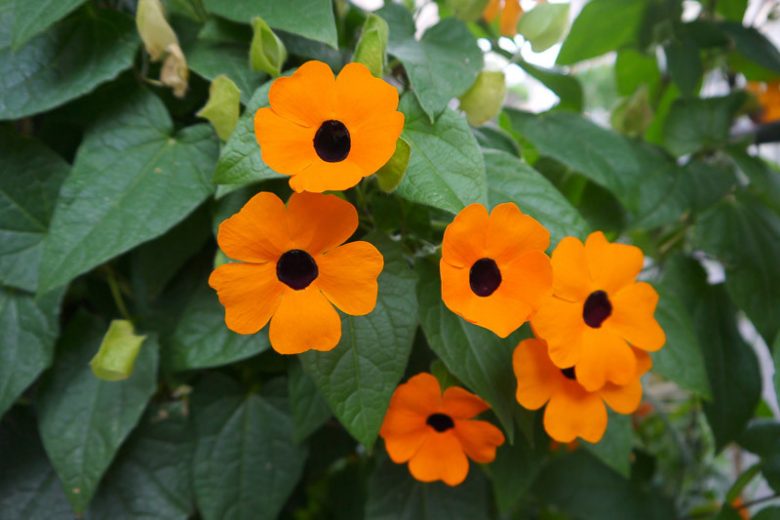
What flowers during March?
- To see what annuals are flowering during March, visit your local nursery
- Groundcovers – Evolvulus, Scabiosa, Arctotis, Osteospermum
- Creepers – Bougainvillea, Pandorea, Black-eyed susan, Mandevilla
- Belladonna lilies, Gaura, Yellow water lily (Nymphoides indica), Salvias, Hibiscus, Tecomaria, Roses, Dietes, Plectranthus, Barleria, Hypoestes, Bauhinia
General Maintenance
- Remove spent flower heads of hydrangeas by cutting back stems to the second bud
- Fuchsias can be cut back by a third to encourage stronger, bushy growth
- Winter flowering shrubs such as Azaleas and Camellias need thorough and regular watering to encourage a good flowering season. Feed with acid compost or peat moss
- Continue feeding summer-flowering annuals
- Harvest seeds of spent annuals and store in marked (name, when harvested) envelopes. Store in a dry and cool place
- Bromeliads can be transplanted
- Divide daylilies, dietes, agapanthus and liriope
- Don’t forget to feed and water the potted plants
- MULCH all the beds with exposed earth, and around your shrubs to retain moisture
- IRRIGATE early evening/early morning to prevent evaporation
- DO NOT IRRIGATE when the wind is blowing
- Rather irrigate for a longer period, less often. Deep watering encourages a healthy root system
- Remove weeds as soon as possible. They use precious moisture, and if left, will go to seed and multiply
What to Sow:
- Hardy annuals like Allyssum, Asters, Candytuft, Canterbury bell, Cornflower, Foxglove, Hollyhocks, Lupin, Nasturtium, Snapdragon, Statice, Sweet Williams
- Although it is still a bit hot here on the West Coast, you can start sowing winter-flowering annuals such as Arctotis, Calendula, African daisies (Dimorphotheca sinuata), Bokbaaivygies, Nemesias, Virginia stocks, Larkspur, Pansies, Felicia
- Sweet peas, delphiniums, primulas and poppies can be sown at the end of the month.
- For Sweet Peas, soak the seed between wet tissue for a day, plant with added compost and lime to the soil. Erect the trellis before sowing the seeds
What to plant:
Indigenous gardens fare well with much less water, and March is one of the best times to establish a fynbos garden. By the time summer arrives it’ll be well-established and ready to endure the heat.
Many indigenous plants are quick-growing, super tough, and long-lived, which means you’ll rarely have to buy replacements. They grow in sync with local conditions and can withstand regional climatic changes, be it drought, flood, frost, or blizzard.
Low maintenance and drought tolerant:
They also need less fertilizing or watering once established. Not only is this good for the environment, it also saves time and money! Furthermore, they cover ground quickly to crowd out weeds, which translates to less time spent weeding.
Soil and Water Conservation:
Indigenous plants’ growth habits keep soil in place, store water where it’s most needed, and stop storm water from running off into waterways. Their dense forms, lush foliage, and plentiful flowers break the fall of plummeting raindrops, causing rainwater to drip into (rather than flood) the soil; the plants’ extensive, deep root systems siphon off moisture and prevent soil from eroding. Consider the Plectranthus neochilus.
Refuge for Wildlife:
Planting indigenous plants in your garden allows you to build natural habitats custom-designed to accommodate local fauna. Indigenous plants are naturally programmed to produce fruit, nectar, seeds, and nuts at the times they are needed by year-round inhabitants and passing-through critters. Surrounding your home with many indigenous plants guarantees you’ll benefit from close encounters with birds, butterflies, and insects. Consider the Tree Fuschia and Cape Honeysuckle.
Enhanced livability:
An ecologically functional landscape full of indigenous species, offers so much more than a sterile, static landscape. It stimulates our children with colour, sound and wonder. It is cleaner, quieter and healthier, and may even increase property values.
And with many indigenous plants being bred into wonderfully compact forms these days – which are well suited to small gardens or for use as small hedges (or even clipped balls in formal gardens) – just think of the Coleonema, ericas, proteas, pincushions, and Carissa.
Indigenous veld bulbs like freesias, Watsonias, Chasmanthe, Crinum, Veltheimia and Albucas, Tritonias, Ixias and Babianas are exquisite flowering beauties that naturalise very well in gardens. Plant them after the first rains.
- For the strappy leaves – Kniphofia, Dietes, restios, Bulbine, grasses
- For something different, look out for Agathosma ovata (buchu), Coleonema ‘Sunset Gold’, Carissa edulis, Tulbaghia simmleri, Jasminum angulare at the nurseries
- Our indigenous Pelargonium range with different aromas is amazing: Pelargonium graveolens or capitatum (rose), Pelargonium citronelllum (citrus), Pelargonium ‘Fragrans’ (muscat), Pelargonium exstipulatum (soft-leaved trifid). For more info on this range and other indigenous plants, visit www.plantzafrica.com
PROPAGATION
- Propagate new plants by taking softwood cuttings of impatiens, coleus, fuchsias, pelargoniums, etc. Take 15cm of young, half-ripened growing tips, dip the end in hormone powder and plant in a moist mix of river sand and compost. Another option is to immerse up to the first eye in water Remember that all leaves must be stripped
- Hardwood cuttings of shrubs can be treated the same way, but use the correct hormone powder and plant in sand/compost mix
CHEMICALS
- Use up chemicals that have been prepared for spraying. Once mixed it can’t be stored. Mix the right quantity to be used..
- LOCK AWAY ALL CHEMICALS USED IN THE GARDEN, AND IF REMOVED FROM ORIGINAL CONTAINER, MARK PROPERLY !!!!!
- DO NOT THROW CHEMICALS THAT ARE PAST THE EXPIRY DATE DOWN THE DRAIN. KEEP LOCKED AWAY UNTIL IT CAN BE DISPOSED OF RESPONSIBLY.
- CHEMICALS THROWN DOWN THE DRAIN MIGHT BE THE WATER YOU HAVE TO DRINK TOMORROW!
- CHECK YOUR SUPPLY BEFORE BUYING NEW CHEMICALS
- Wear gloves when spraying, and stand clear of the mist
- Never spray on a windy day, especially when using a herbicide
- Try the environment-friendly option by using the sprays seen under ARTICLES, or use the Ludwigs / Margaret Roberts products
Roses
- Only feed the roses if you have adequate water to irrigate
- Keep spraying for black spot, downy mildew and red spider mite twice a month. See ORGANIC RECIPES under ARTICLES, or use Ludwigs/Margaret Roberts products
- Roses will not flower well if the water doesn’t reach the roots – dig a hole next to a rosebush and check how deep the water penetrate. Adjust the irrigation
Lawn
- Kikuyu can be cut shorter gradually as the weather starts to cool down, preventing a thick thatch from forming
- Shade grass must be watered more often and cut with a higher blade
- Contemplate other options than kikuyu that need less water – Kaapse kweek, LM, Buffalo.
Vegetable Garden
What to sow when the temperature drops to mid 20’s:
Beetroot, broad beans, broccoli, Brussel sprouts, cabbage, carrots, cauliflower, celery, leeks, lettuces, onions, parsley, peas, radishes, Swiss chard, turnips, Chinese cabbage, kohlrabi, parsnips, spinach
What to plant:
- Herbs
- Chives and garlic chives, coriander, rocket, rosemary
- Artemisia affra for the beautiful silvery foliage, and its use as pesticidal spray
- Feed citrus trees with an organic fertilizer high in potassium, and add about 5 tablespoons of Epsom salts per grown tree. Water well after fertilizer application.
- Keep an eye on the Brassicas for mildew. Remove old diseased leaves
- Fertilize tomatoes, brinjals and peppers and keep picking to keep the plants productive
- Trim out tomato leaves that shade fruit from the sun; the tomatoes will ripen earlier
- When lettuce dry out it becomes bitter – keep watering
- Plant nasturtiums among your brassicas (Brussel sprouts, broccoli, cabbage and cauliflower) – they attract aphids, white fly and red spider mite. Don’t over water, they will produce more leaves at the expense of flowers
Did you know?
Red cabbage has more phytonutrients than green cabbage. The vitamin C content is 6-8 times higher than that of a green cabbage. The red pigment (anthocyanin) found in red cabbage and purple cauliflower is an antioxidant that may help protect brain cells and prevention of Alzheimer’s disease!